In the world of electrical measurements, instrument transformers are indispensable equipment that forms the foundation for many critical devices that fall under the category generally known as instruments such as voltmeters, ammeters, watt-meters, protection relays, etc. Their primary purpose is to change currents and voltages from one magnitude to another and to isolate the measuring circuit from the primary circuit for safety.
Instrument transformers can be divided into two basic categories: current transformers (CT) and voltage transformers (VT). Current transformers are most commonly window type (or bushing type), where the primary of the transformer is an incoming or outgoing conductor(s) that is pulled through it. Bar-type and wound CTs are also available, which are connected in line (series) with bus bars or cable terminations bolted on both sides. Voltage transformers also come in variations such as electromagnetic, capacitor, and optical type and are parallel-connected to the circuit to be measured.
Std IEEE C57.13 and IEC 60044 have established standardized requirements for classifying instrument transformers according to accuracy and burden as well as test procedures applicable to current and voltage transformers. Certainly, instrument transformers must have high accuracy to ensure proper operation of the devices connected to them.
Instrument transformers for metering purposes must have a high accuracy to ensure precise billing while those used for protection purposes must function accurately to ensure the proper operation of protection equipment in the event of a fault, to guarantee maximum safety of supply. Therefore, it is essential to inspect and test them at regular intervals.
Haefely’s 2771 CITAS & 2772 VITAS
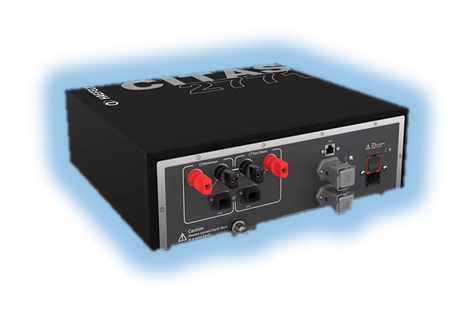
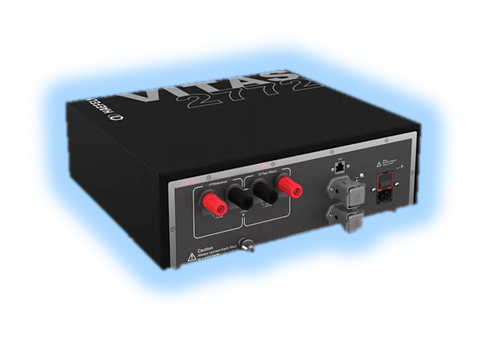
The CITAS 2771 and VITAS 2772 are fully digital current instrument transformer (CT) and voltage instrument transformer (VT) measuring bridges. They combine the knowledge gathered over 70 years in this field, with state-of-the-art technology to exceed industry requirements. The CITAS 2771 & VITAS 2772 measures ratio error, phase error, and excitation current according to the latest IEC and ANSI standards. Test objects and nominal transformers with large differences in ratio can be measured with full accuracy, reducing the number of reconnections while testing. Specified accuracy is independent of excitation current or reference environmental conditions (temperature & humidity) and guarantees highly accurate results under any circumstance.
CITAS & VITAS Features
-
- High accuracy results independent of temperature or excitation current
- Extremely large k-factor (difference between nominal transformer and test object ratios)
- Computer controlled with Windows-based Haefely CaMS user interface
- Automatic error limits according to IEC and ANSI/IEEE standards
- Fast stabilization time
- Controls Haefely 3695 electronic voltage burden
- Optically decoupled from computer by fiber optic data connection
- Scope function – waveshapes of the measured signals shown in real time
- Datalogger – readings can be collected and represented graphically to see deviations
- Compact, reliable, and EMC hardened design, IP50
Typical Test Setup
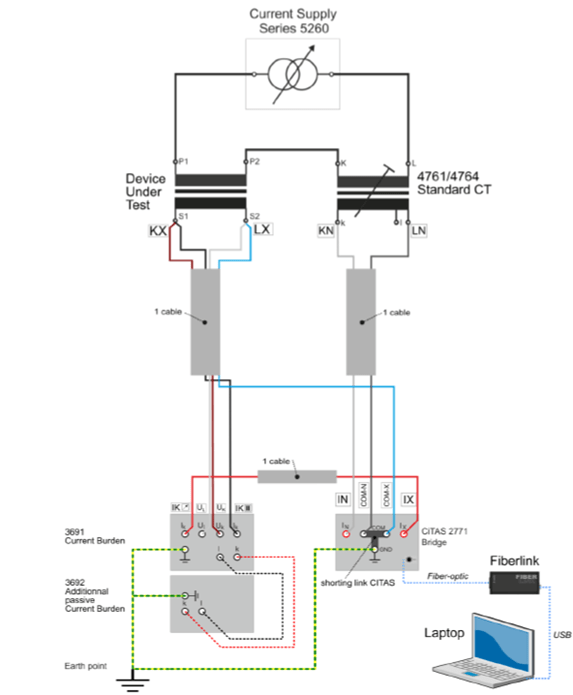
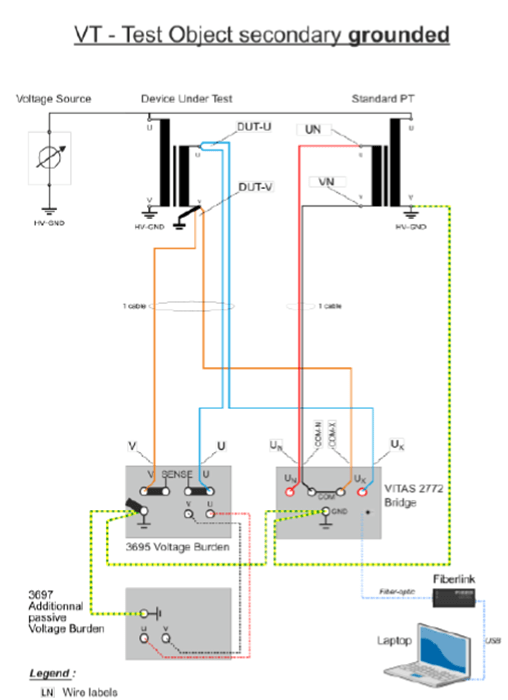
To perform an accuracy test on CTs and VTs there are several components to be included in the test setup.
- A current or voltage power supply.
- A reference instrument transformer or electronic divider.
- A burden to simulate the measuring instruments (burdens) connected to the test object.
- A measuring bridge to measure the vector differences between the reference device and the test object.