

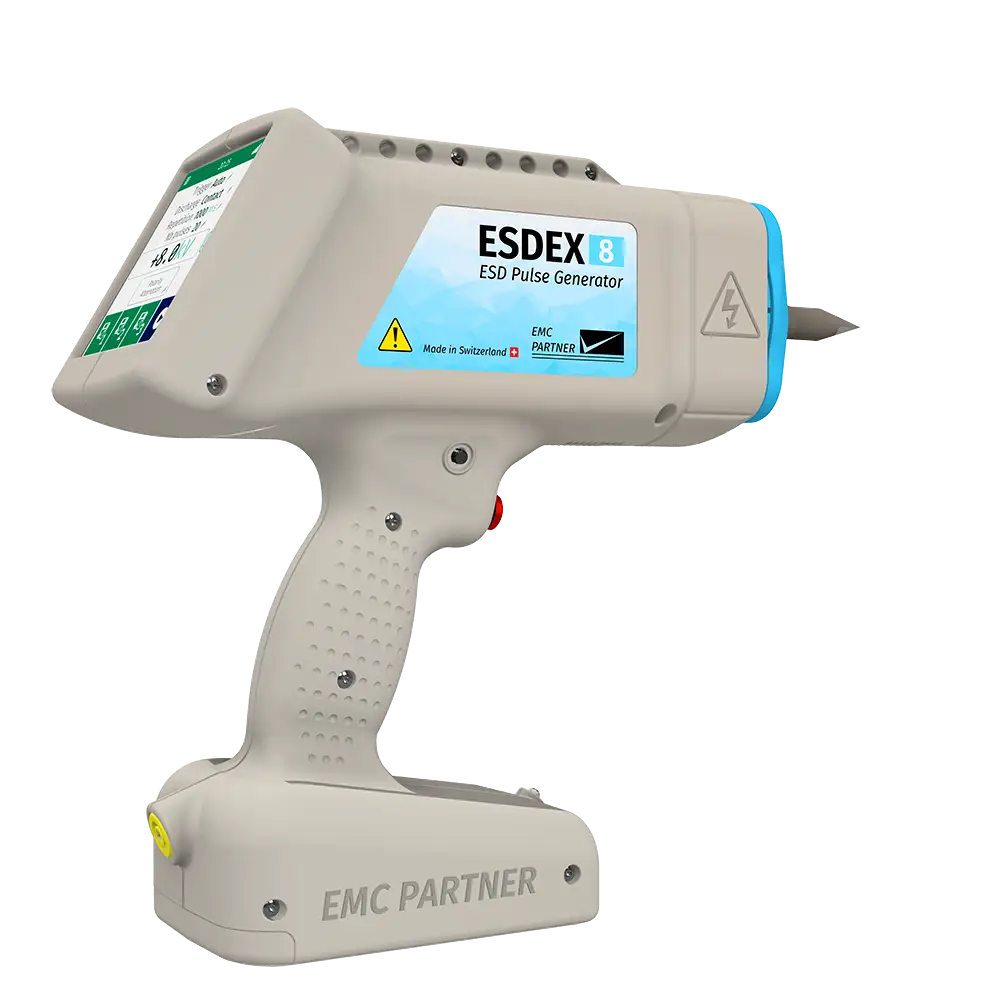
When purchasing an electrostatic discharge (ESD) generator, it’s easy to focus on one specification: maximum output voltage. But choosing the right ESD simulator involves much more than selecting between 16 kV and 30 kV.
Today’s electronic devices are smaller, faster, and more sensitive than ever before, making reliable ESD testing essential across industries including automotive, aerospace, medical devices, industrial automation, and consumer electronics. The right ESD simulator helps engineers perform accurate, repeatable testing while improving efficiency and supporting compliance with evolving EMC standards.
Before investing in an ESD gun, here are five key factors every engineer should consider.
1. Verify Compliance with the Standards You Need
The first question isn’t, “How many kilovolts does it produce?”
Instead, ask: Which standards must it support?
Many laboratories need to perform testing under multiple standards, including:
➡️IEC 61000-4-2 – Commercial and industrial electronics
➡️ISO 10605 – Automotive electronics
➡️MIL-STD-461 CS118 – Military equipment
➡️RTCA DO-160 Section 25 – Aircraft electronics
Purchasing an ESD generator that supports interchangeable RC networks allows a single instrument to cover multiple applications, rather than maintaining separate equipment.
2. Consider Operator Comfort
ESD testing often requires hundreds, or even thousands, of discharge events during a single test sequence. Over time, a poorly designed ESD gun can contribute to operator fatigue, inconsistent discharge placement, and slower testing. An ergonomic, well-balanced design helps engineers maintain accuracy and repeatability throughout long testing sessions.
Modern ESD simulators also improve efficiency with features like touchscreen controls and programmable shortcut buttons that simplify setup and reduce time spent navigating menus. While these may seem like convenience features, they can have a meaningful impact on productivity and the consistency of test results.
Look for features such as:
✔️Lightweight, ergonomic construction
✔️Balanced grip
✔️Easily accessible controls
✔️Touchscreen operation
✔️Programmable shortcut buttons
These features improve both efficiency and repeatability during long test sessions.
3. Think Beyond Today’s Voltage Requirements
Many commercial products only require testing to standard voltage levels.
However, purchasing equipment with higher voltage capability can provide additional flexibility for:
✔️Future customer requirements
✔️Specialized testing
✔️Research and development
✔️Expanded laboratory capabilities
Choosing a platform that can grow with your testing needs often provides better long-term value.
4. Automation Saves Time
Modern EMC laboratories are expected to complete testing quickly while maintaining thorough documentation.
Modern ESD simulators offer more than just high-voltage performance; they help streamline the entire testing process. Features that streamline daily testing include:
➡️User-defined test sequences
➡️Automatic RC network recognition
➡️Built-in report generation
➡️USB data export
➡️Rechargeable battery operation
➡️Firmware updates
These capabilities reduce setup time, minimize manual data entry, improve consistency between test sessions, and make it easier to maintain accurate test records as requirements evolve. Ultimately, engineers can spend less time configuring equipment and more time evaluating product performance.
5. Look for a Modular Platform
Testing requirements rarely stay the same.
Instead of replacing an entire ESD simulator every few years, consider a modular platform that allows accessories, networks, and capabilities to be expanded as standards evolve.
A flexible design helps protect your investment while keeping your laboratory ready for new applications.
Common Mistakes When Choosing an ESD Gun
Selecting an ESD simulator is a long-term investment, and focusing on a single specification can lead to costly limitations later. Before making a purchase, consider how the instrument will support both your current and future testing requirements.
Some common mistakes include:
❌Choosing an ESD gun based solely on maximum voltage
❌Overlooking support for multiple industry standards
❌Ignoring ergonomic features that affect operator comfort and repeatability
❌Selecting equipment that cannot be easily upgraded as testing needs evolve
❌Forgetting the importance of automated reporting and documentation for efficient recordkeeping
By evaluating the complete capabilities of an ESD simulator, not just its technical specifications, you can choose a solution that improves productivity, supports compliance, and continues to meet your laboratory’s needs for years to come.
Keeping these considerations in mind can help ensure you select an ESD simulator that meets both your current testing requirements and future laboratory needs.
A Modern Solution for Today’s EMC Laboratories
Selecting the right ESD simulator isn’t just about meeting today’s compliance requirements; it’s about investing in equipment that supports your laboratory for years to come.
The ESDEX Series from EMC Partner brings together the capabilities discussed throughout this guide. Combining ergonomic design, modular flexibility, touchscreen operation, programmable controls, and support for major international ESD standards, it offers laboratories a practical solution for compliance testing, product development, and EMC research.
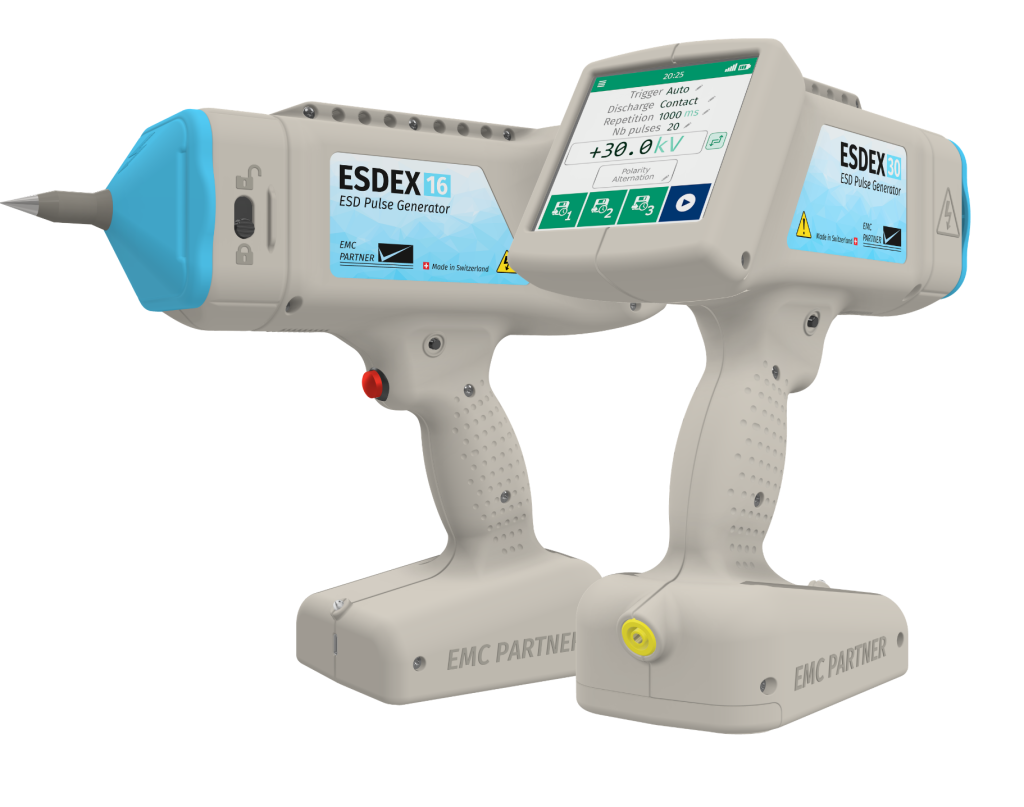
Some of the ESDEX’s standout features include:
✔️Available in 8 kV, 16 kV, and 30 kV models
✔️User-defined test plans
✔️Programmable shortcut buttons
✔️Automatic RC network recognition
✔️On-board report generation in PDF, CSV, and HTML formats
✔️Rechargeable battery with fast USB-C charging
✔️Firmware updates at no additional cost
✔️Optional self-check and test assistant functions
Rather than forcing laboratories to compromise between performance, usability, and flexibility, the ESDEX brings these capabilities together in a single platform. Its ergonomic design, modular RC network system, touchscreen interface, automated reporting, and compliance with major international standards make it well suited for both routine compliance testing and advanced EMC applications.
Frequently Asked Questions
What's the difference between an ESD gun and an ESD simulator?
The terms are generally used interchangeably. ESD simulator is the formal term used in industry standards, while ESD gun is the name most engineers use because of the instrument’s handheld design.
What industries use ESD generators?
ESD testing is essential anywhere electronic products must demonstrate immunity to electrostatic discharge. Common industries include automotive, aerospace, defense, medical devices, industrial controls, telecommunications, consumer electronics, and information technology equipment.
Do I need a 30 kV ESD gun?
Not every application requires 30 kV testing. However, higher-voltage capability can provide additional flexibility for future standards, specialized testing, research applications, and customer-specific requirements. It also helps ensure your equipment remains useful as testing needs evolve
Why are interchangeable RC networks important?
Different test standards specify different resistor-capacitor (RC) network combinations. Interchangeable networks allow a single ESD simulator to support multiple standards without requiring separate instruments, providing greater flexibility and long-term value.
Is ergonomics really that important?
Yes. During lengthy test programs, operators may perform hundreds or even thousands of discharge events. A well-balanced, ergonomic design helps reduce fatigue, improve consistency, and enhance repeatability throughout the testing process.
Can the ESDEX be customized?
Yes. The ESDEX’s modular architecture allows users to configure the generator with different RC networks and optional features to match specific testing requirements, providing the flexibility to adapt as laboratory needs evolve.