


In the field of Electromagnetic Compatibility (EMC), ensuring that electronic equipment operates reliably among various electrical disturbances is critical. One significant aspect of this assurance is Electrical Fast Transient (EFT) testing, which gauges a device’s resilience to rapid, high-frequency transients.
What is Electrical Fast Transient (EFT)?
Electrical Fast Transients are bursts of high-frequency pulses, typically resulting from arcing contacts during the switching of inductive loads, such as relays or circuit breakers. These transients can introduce noise and potential malfunctions in electronic systems if not properly mitigated.
Importance of EFT Testing
EFT testing assesses an electronic device’s immunity to these fast transients, ensuring reliable operation in real-world environments where such disturbances are common. Compliance with standards like IEC 61000-4-4 is often mandatory for equipment to be marketed globally, as it verifies the device’s strength against EFT events.
IEC 61000-4-4 Standard Overview
The IEC 61000-4-4 standard specifies the test methods and levels for evaluating the immunity of electrical and electronic equipment to EFTs. Key aspects include:
-
- Test Levels: Defined voltage peaks (e.g., 0.5 kV, 1 kV, 2 kV, 4 kV) applied to power supply, signal, and control ports.
- Pulse Characteristics: Fast rise times (approximately 5 ns) and short durations (about 50 ns).
- Repetition Frequency: Typically, 5 kHz or 100 kHz bursts.
EFT Testing Procedure
- Preparation: The Equipment Under Test (EUT) is set up according to the manufacturer’s specifications, ensuring normal operation during testing.
- Test Setup: An EFT generator is connected to the EUT’s power supply lines, and if necessary, to signal and control lines using appropriate coupling devices.
- Execution: The generator delivers bursts of fast transients at specified voltage levels and repetition rates.
- Monitoring: The EUT is observed for any malfunctions, disruptions, or performance degradation during and after the application of EFT bursts.
- Evaluation: Results are analyzed to determine if the EUT meets the required immunity standards.
Real-World Applications of EFT Testing
EFT testing is critical across industries where electronic systems must operate reliably under various electrical disturbances. Some of the main sectors benefiting from EFT testing include:
-
- Consumer Electronics: Computers, laptops, televisions, home appliances, and multi-media equipment.
- Industrial Equipment: Automation systems, control panels, machinery used in factories and plants.
- Automotive: Electronic control units (ECUs) in vehicles, including advanced safety systems, infotainment, and autonomous driving systems.
- Medical Devices: Critical medical equipment like diagnostic tools, patient monitoring systems, and health devices.
- Telecommunications: Telecom infrastructure, including base stations and communication devices, that withstands power line surges and electrical noise.
Challenges of EFT Testing and How to Overcome Them
While EFT testing is crucial, it presents several challenges, especially when testing complex systems or meeting strict regulatory requirements. Testing complex systems, such as those found in medical or automotive equipment, can be difficult due to their intricate wiring and integrated components.
-
- Dealing with Complex Test Setups: Some devices, particularly those used in automotive and industrial settings, involve intricate electronics and multi-component systems that require complex testing setups. Overcoming complex test setups generally involves developing a comprehensive Test Plan. This often involves both the EUT manufacturer and the lab performing the testing.
- Achieving Accurate Simulations: Accurately simulating the fast transients’ waveform while avoiding external noise or inaccuracies is one of the primary challenges in EFT testing.
- Automating the Process: Running consistent tests, especially across different devices, can be time-consuming and error-prone. Overcoming accuracy and automation challenges is best solved by choosing the proper test equipment.
Tips for Selecting the Right EFT Testing Equipment
Selecting the right EFT testing equipment ensures that your electronic devices are thoroughly tested for their immunity to fast transients. Here are some tips to guide you in making the best choice for your testing needs:
-
- Evaluate the Test System’s Compliance with Appropriate Standards: Make sure that the testing equipment you select complies with the correct industry standards, such as IEC 61000-4-4, IEC 61000-4-5, and IEC 61000-4-11. Test equipment compliance ensures that your EUT will meet global regulatory requirements, product standards, and be suitable for international markets.
- Consider Modular and Expandable Systems: Choose a system that can adapt to your evolving testing needs. Modular platforms allow you to add test capabilities as new standards and technologies emerge, making your investment future-proof.
- Focus on Flexibility and Customization: Select equipment that can be easily customized to meet the specific needs of your products. Devices with flexible settings for pulse duration, voltage levels, and frequency repetition rates provide the versatility to test a variety of devices across different sectors.
- Look for Automation Features: Automated testing capabilities streamline the testing process, reduce the risk of human error, and ensure consistency. Automated systems also help save time and are especially beneficial for high-volume testing environments.
- Evaluate Data Logging and Reporting Capabilities: The ability to track test results, generate detailed reports, and analyze data is vital for quality control and compliance documentation. Look for systems that offer robust data logging features to ensure comprehensive results.
- Test System Footprint and Ease of Integration: If your lab has limited space, a compact and easy-to-integrate test system may be the right choice. The equipment must fit well within your testing setup without compromising performance.
Let’s explore premium-grade testing systems specifically designed to support thorough and accurate Electrical Fast Transient (EFT) testing across a wide range of applications and environments.
IMU Series Immunity Test System
The IMU Series is a multi-purpose and multi-function generator capable of performing EFT, surge, ring wave, voltage dips/interruptions, and magnetic field tests. Upgradeable to accommodate evolving standards, these systems offer users an intuitive drag-and-drop interface for efficient test sequence creation.
IMU-MGS
The IMU MGS is a compact, modular test generator for EFT/Burst and Surge testing up to 5.0 kV. It has an integrated 16A CDN and can be extended with ESD, Dips/Interrupts, and common-mode testing. It has a color touch screen and intuitive software. An integrated help menu, with graphics, guides the user through fast and efficient setup and operation. The MGS can be extended on-site with up to 10 test types. A test library of basic and generic requirements is included. The integrated web server enables access to the test report and setup files from any internet browser.
Key Features: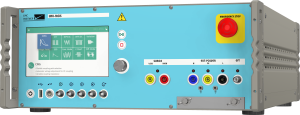
-
- 4 kV or 5 kV Impulses
- Integrated variac
- Integrated Common Mode
- Control of ESD
- Control of Differential Mode
- DIPS / Interrupts & Variations
- AC & Impulse Magnetic Fields
- Wide range of test accessories
IMU-MGE
The IMU MGE is a compact, modular test generator for EFT/Burst, Surge, Ringwave, and 10/700 impulses up to 8.0 kV. It has an integrated 16A CDN and can be extended with ESD, Dips/Interrupts, and common-mode testing. It has a color touch screen and intuitive software. An integrated help menu, with graphics, guides the user through fast and efficient setup and operation. The MGE can be extended on-site with up to 10 test types. A test library of basic and generic requirements is included. The integrated web server enables access to the test report and setup files from any internet browser.
 Key Features:
-
- 6 kV or 8 kV Impulses
- DIPS / Interrupts & Variations
- Integrated Common Mode
- Control of ESD
- Control of Differential Mode
- AC & Impulse Magnetic Fields
- Integrated variac
- Wide range of test accessories
Advanced Features
The IMU Series Generators include advanced data logging and real-time performance tracking, allowing manufacturers to monitor test progress and capture inconsistencies. This feature is essential for generating compliance reports and tracking long-term product performance. Both the IMU-MGS and IMU-MGE offer flexibility and precision, making them suitable for various industries.
-
- Customization for Test Protocols: Both systems allow for tailored test setups to meet specific application needs, ensuring that testing conditions align with the product being tested.
- Advanced Data Logging: These systems provide detailed data logging for tracking results and generating compliance reports, crucial for audits and product verification.
- Automation for Consistency: Automation features ensure efficient, repeatable test execution, guaranteeing consistent and accurate results ready for certification.
EFT testing plays a vital role in ensuring that electronic equipment can function safely and reliably in noisy and transient-prone environments. As regulatory standards become more stringent and electronics more sensitive, the need for reliable, standards-compliant testing is greater than ever.