


Military aircraft operate in diverse and often harsh environments. Avionics testing includes environmental testing to simulate extreme temperatures, humidity, and high altitudes. This ensures that avionics systems can withstand challenging environmental factors without degradation in performance. Military avionics, encompassing communication, navigation, radar, and electronic warfare systems, must undergo rigorous testing to meet stringent military standards and specifications with unique requirements for defense applications in performance, interoperability, and security.
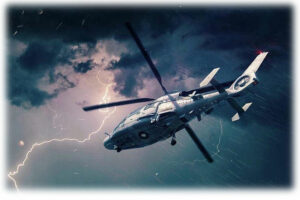 A significant benefit of military avionics testing is its contribution to cost savings and resource optimization. By detecting and addressing issues early in the design and development phase and follow-up testing due to recurring maintenance issues, avionics testing helps prevent costly system failures and extends the lifespan of avionic components. This “preventative maintenance” approach reduces the frequency of unexpected breakdowns and the associated expenses of unscheduled repairs. Overall, the thorough and systematic testing of military avionics enhances operational readiness and provides long-term economic advantages through improved reliability and efficient resource utilization by strategically allocating resources and prioritizing investments in the most critical areas.
Testing equipment for military avionics serves various purposes, including functional testing, environmental testing, and electromagnetic compatibility (EMC) testing. These tests are essential to validate the functionality of avionics components under diverse operating conditions and to verify their resilience.
Advancements in military avionics testing equipment have been driven by the increasing complexity of avionics systems and the need for more sophisticated testing methodologies. Automated testing systems with built-in artificial intelligence and machine learning capabilities are becoming prevalent, allowing quicker and more accurate testing processes. These advancements enhance the efficiency of testing procedures and contribute to the overall reliability of military avionics, ensuring that aircraft can perform their missions with precision and dependability in challenging operational environments.
Conducted Susceptibility Testing
Conducted susceptibility (CS) testing, which evaluates the ability of a device or system to operate properly in the presence of conducted electromagnetic interference (EMI). The CS test involves subjecting the equipment under test (EUT) to intentional electromagnetic interference induced through its power and signal lines. The CS test generator generates this interference. The CS generator is designed to produce controlled and repeatable interference signals, replicating the types of electrical disturbances that military equipment might experience during operation.
Military standards, such as those defined in the MIL-STD series (Military Standards), set forth the requirements for CS testing, including the characteristics of the interference signals, test methods, and performance criteria. CS generators are crucial in ensuring that military equipment is robust and can operate effectively in the presence of electromagnetic interference. This is particularly important in mission-critical scenarios where reliable performance is essential.
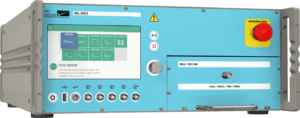 EMC Partner’s MIL-MG3 conducted susceptibility test system is specifically designed to meet the test requirements outlined in MIL-STD-461 – CS06, CS106, CS115, and CS116, along with compliance with RTCA DO 160 Section 17 and Section 19. The system is provided as a turn-key solution right out of the box, including a calibration jig and all necessary accessories for seamless operation.
Indirect Lightning Test System
Compact indirect lightning testers are essential in assessing and mitigating the potential adverse effects of lightning strikes on electronic systems. Designed with portability in mind, these testers offer a convenient solution for engineers and technicians who need to conduct field tests or evaluate the susceptibility of electronic equipment to lightning-induced interference. Their compact design does not compromise their testing capabilities; rather, it enhances versatility by allowing users to assess various systems in diverse operational environments, including avionics, communication equipment, and sensitive electronics.
EMC Partner’s AVI-LV3, a cutting-edge test system, ensures full compliance up to level 3 for PIN injection and Cable bundle tests, encom
passing Single Stroke, Multiple Stroke, and Multiple Burst, in accordance with DO-160 Section 22 and MIL-STD-461 CS117, while also meeting CS117 test levels for internal equipment.
 Features:
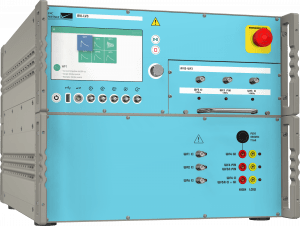 Features:
- 7″ Color Touch Screen GUI
- All 6 waveforms in one generator
- Guaranteed Level 3 under all load conditions
- Built-in phase synchronization up to 800Hz.
- Integrated AC/DC de-couplers for powered PIN testing
- Man-portable unit for on-site testing
- Automated test process, no need to change generator
- More efficient testing with less user intervention.
- Full compliance testing without additional hardware
- Increased system availability, higher throughput